Guide
AI VideoCase Study VideoVideo MarketingMarketing Agency ToolsHow to Create Case Study Videos with AI (In Under 10 Mins)
Digital marketing education is one of YouTube's most profitable niches. With every business needing an online presence, the demand for marketing knowledge is insatiable. Channels like Neil Patel, Ahrefs, and Indian creators like Digital Deepak have built massive audiences teaching digital marketing. This guide shows you how to do the same.
By the FluxNote Editorial Team · Last updated: April 25, 2026
Step-by-Step Guide
Choose your marketing specialty
Pick one area: SEO, paid ads, social media, or content marketing. Become the go-to expert for that specific skill.
Show real results
The most trusted marketing channels show actual dashboards, real traffic numbers, and genuine campaign results. Transparency builds authority.
Create tool-focused tutorials
Screen record step-by-step tutorials with popular tools (Google Analytics, SEMrush, Canva). Tool tutorials get consistent search traffic.
Build a case study library
Document marketing campaigns (your own or with permission) as case studies. Real results content converts viewers to subscribers.
Monetize through affiliates and courses
Marketing tool affiliates (₹500-5,000 per signup), selling courses (₹5,000-50,000), consulting services, and YouTube ads.
Step 1: Generate the Script with AI in 90 Seconds
The first step in how to create case study videos with AI is generating a tight, persuasive script.
Instead of hours of copywriting, you can use a large language model to get a first draft in under two minutes.
Tools like ChatGPT-4o or Claude 3 Sonnet can convert raw customer feedback or a simple brief into a structured narrative.
For best results, use the 'Problem-Agitate-Solution' (PAS) framework.
Provide the AI with a prompt like: 'Create a 90-second video script based on this case study.
Start with the customer's problem (low lead quality), agitate it (wasted ad spend), and present our service as the solution (doubled conversion rate in 60 days).' The AI will generate a scene-by-scene script, often including suggestions for visuals.
This process reduces scripting time from 3-4 hours to less than 10 minutes, and the output can be directly fed into an AI voice generator.
Step 2: Produce AI Voiceover and Source B-Roll
A human-sounding voiceover builds trust. Modern text-to-speech (TTS) platforms like ElevenLabs or Play.ht create realistic audio for a fraction of the cost of a voice actor.
The ElevenLabs 'Starter' plan, for instance, costs $5 per month and provides enough credits for dozens of short case study videos. Simply paste the script from Step 1 into the TTS tool, choose a voice profile (e.g., 'professional, male, 30s'), and render the MP3 file.
While the audio is generating, the AI video platform can begin sourcing relevant B-roll footage. Based on the script's text, the system pulls clips from integrated stock libraries like Storyblocks or Pexels.
For a line about 'increased sales', it will find clips of charts trending upwards or positive business interactions, saving you hours of manual searching.
Step 3: Assemble Scenes and Add AI-Powered Captions
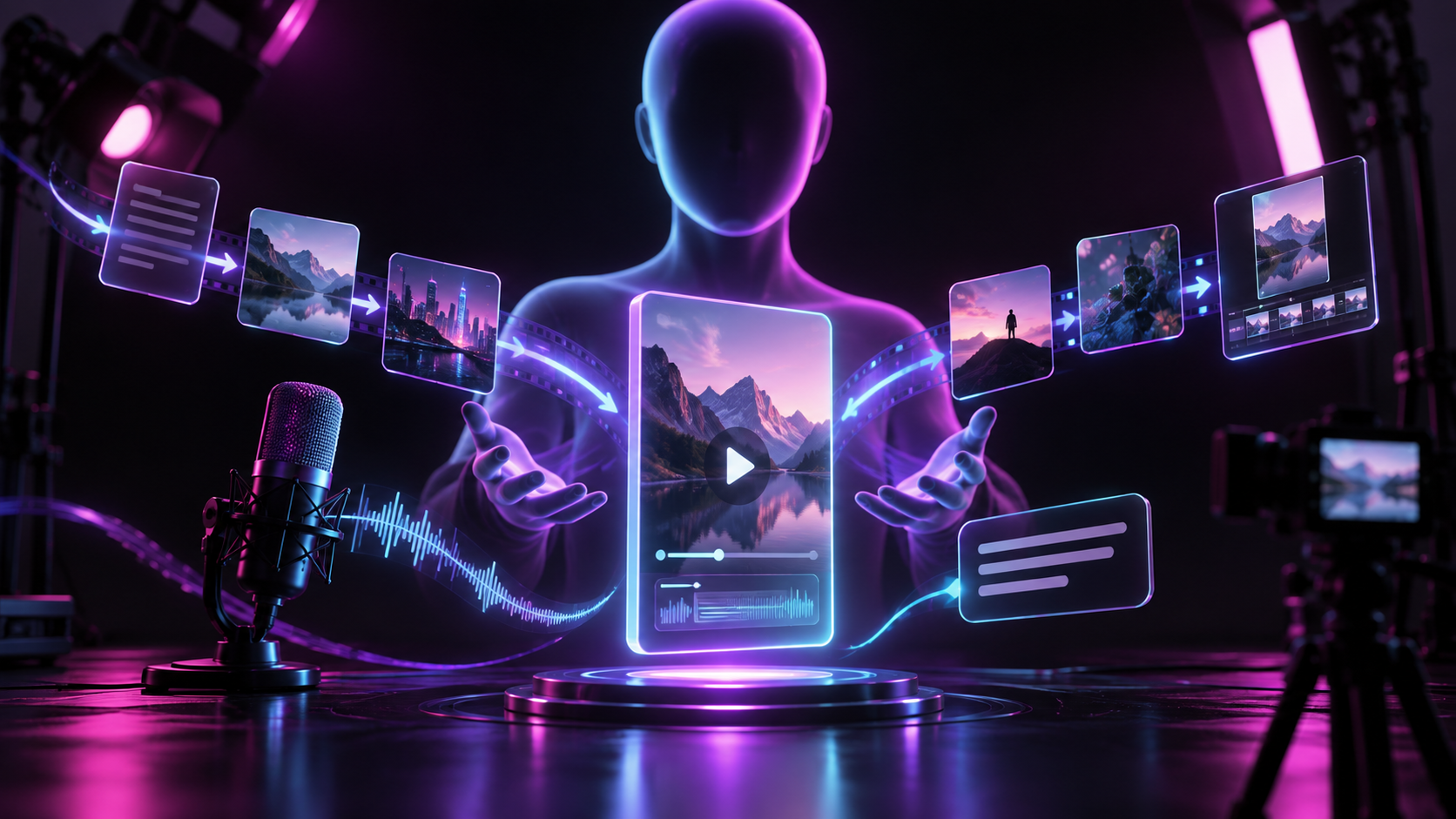
With the script, voiceover, and B-roll ready, the AI assembles the video. Each sentence or paragraph from the script becomes a new scene, automatically synchronized with the voiceover and paired with the most relevant stock clip.
This is the core time-saver. The next critical action is adding captions.
According to a 2019 Verizon Media study, 69% of consumers view video with the sound off in public places. AI-powered transcription accurately converts the voiceover into timed captions.
Most tools allow you to customize the font and color to match your brand's style guide. A key nuance is to check for brand names or jargon; AI transcription is over 95% accurate for common words but may need a quick manual correction for unique terms before you finalize the video.
Step 4: Choosing the Right AI Video Platform for Agencies
Different platforms are optimized for different outputs.
High-end avatar tools like Synthesia are excellent for corporate training but can be expensive, with their Personal plan starting at $29/mo.
For marketing agencies needing to produce multiple short-form case studies for social media, speed and cost are primary factors.
The goal is to find a platform that bundles AI scripting, voiceover, stock footage, and captioning into one workflow without a high per-video cost.
For agencies creating dozens of videos under 90 seconds, a tool like FluxNote offers plans starting at $10/mo that include all these features, making it a cost-effective choice for scaling client success stories on platforms like LinkedIn and Instagram.
Step 5: Common Mistakes to Avoid with AI Case Studies
Creating case study videos with AI is fast, but a few mistakes can undermine their impact. First, using a generic AI voice without adjusting its pacing can sound robotic.
Use a tool that allows you to add pauses or change inflections. Second, forgetting to brand the video is a missed opportunity.
Always add the client's logo (with permission) and your own agency's watermark or end-card. Third, making the video too long kills engagement on social media.
Aim for 60-90 seconds maximum. Data and results should be presented quickly using on-screen text overlays.
Finally, every case study must have a clear Call-To-Action (CTA). The last 5 seconds should prompt the viewer to 'Book a Demo' or 'Download the Full Report', with a URL visible on screen.
Pro Tips
- Show real dashboards and numbers, marketing audiences are skeptical of vague advice
- Tutorial videos should be screen-recorded with clear step-by-step narration
- Stay updated, marketing platforms change constantly; outdated content loses credibility
- Create free templates and checklists to drive email list growth
- Affiliate links for marketing tools are among the highest-paying on the internet
Create Videos With AI
From inspiration to your own creation
Put your next idea into action.
Videos, images and ads. One creative studio. Pick what you want to make—or try the walkthrough before you sign up.
Your ideas. Your videos. No camera required.
Turn your next story into a faceless video. Explore the workflow, then create your own in FluxNote.
- 01 Choose a style
- 02 Add your idea
- 03 Make it your own
Start with an account. Create at your own pace.
Loading walkthrough… Full-screen link below if needed.
Tool access and generation allowances depend on your plan.
Frequently Asked Questions
Related Resources
- GuideHow to Create AI Generated Sports Commentary (in 3 Steps)
- GuideHow to Create Faceless Finance Videos for YouTube (2026)
- ToolText to Video AI: Turn Text Into Videos [Fast]
- ToolAI Faceless Video Generator Guide | FluxNote
- GuideHow to Create a Case Study Video with AI (Step-by-Step)
- GuideFluxNote vs Manual Work
- ToolBrainrot Study Tool Guide | FluxNote