Guide
Ai video generatorFaceless youtube channelYoutube automationFree ai toolsCreate Faceless YouTube Videos for Free with AI (2026 Guide)
Scheduling Tools are essential for faceless YouTube channel production. This guide reviews the best options, pricing, and how to choose the right tools for your workflow.
By the FluxNote Editorial Team · Last updated: April 25, 2026
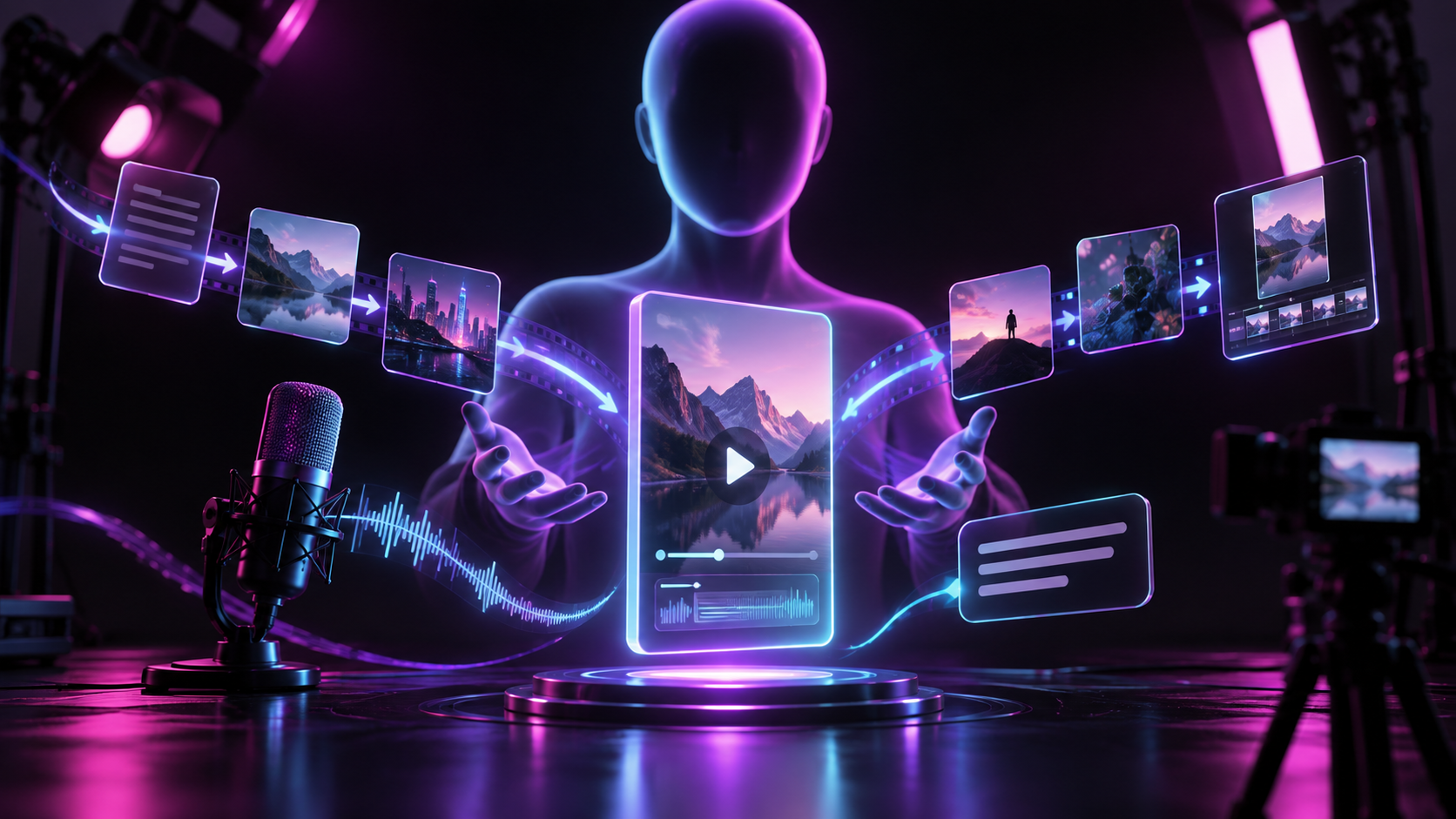
Step 1: Generate a Video Script with Free AI Writers
The foundation of any good video is the script. For a faceless channel, the narrative has to carry the entire production.
You can generate a complete script for a 5-minute video in under 10 minutes using free AI tools. Start with a tool like ChatGPT (the free GPT-3.5 model) or Claude (free tier) to brainstorm topics and generate a detailed outline.
Provide a prompt like: "Act as a YouTube scriptwriter. Write a 750-word script for a faceless video titled '5 Ancient Roman Inventions We Still Use Today'.
Include a strong hook, five main points with details, and a concluding call to action." For better structure, you can then feed this draft into a tool like the Hemingway App (free web version) to simplify sentences and improve readability. This process ensures your AI-generated voiceover sounds natural and holds viewer attention.
A common mistake is using the first AI draft verbatim; always refine the text for pacing and clarity, as AI models often produce repetitive sentence structures. As of Q1 2026, Claude's free tier offers a larger context window than the free ChatGPT, making it better for processing longer source documents for script research.
Step 2: Produce a Human-Like Voiceover Without a Mic
A robotic voice can cause viewers to drop off in seconds. Fortunately, free AI text-to-speech (TTS) technology has improved dramatically.
ElevenLabs offers a free tier that provides 10,000 characters per month, which is enough for about 6-7 minutes of narration. This plan includes access to their high-quality, natural-sounding voices.
To use it, simply paste your script from Step 1 into their Speech Synthesis tool, select a voice like "Adam" or "Rachel" for a clear, engaging tone, and download the resulting MP3 file. Another excellent free option is Microsoft's Clipchamp editor, which includes a surprisingly capable free TTS generator with dozens of voices.
A key detail is to break your script into smaller paragraphs before generating the audio. This makes it easier to edit and time the voiceover to your visuals later.
Generating the entire script as one monolithic audio file is inflexible and leads to editing problems. For comparison, the free plan from PlayHT offers fewer characters monthly but provides different voice styles that might better suit specific niches like horror or meditation.
Step 3: Source and Assemble Visuals Automatically
With your script and voiceover complete, you need visuals.
Manually sourcing stock footage that matches a script is time-consuming.
AI-powered tools solve this by analyzing your script and finding relevant clips for you.
The free plan for Pictory.ai allows you to create up to three video projects, each up to 10 minutes long, by automatically selecting clips from its stock library based on your text.
You upload your script, and the AI creates a storyboard with suggested visuals.
Another strong alternative is the free version of Canva, which includes a video editor and a large library of free stock photos and video clips.
Its 'Magic Design for Video' feature, available on the free plan as of January 2026, can generate a short video from a text prompt.
For creators needing completely unique imagery, Microsoft Designer's Image Creator (powered by DALL-E 3) offers 15 free boosted generations per day, allowing you to create custom illustrations or graphics that perfectly match your script's content.
The main limitation of free plans is often video resolution, with most capping exports at 720p.
Step 4: Combine Audio, Visuals, and Captions
The final step is to bring all the elements together. A video editor is required to combine your AI voiceover with the visuals and add captions for accessibility and retention.
CapCut offers a free desktop app that is powerful enough for this task, providing multi-track editing, auto-captioning, and transitions without a watermark. Upload your AI-generated visuals and the MP3 voiceover file.
Use the 'Auto captions' feature to transcribe the audio into timed text on screen; this single step can increase watch time by over 12%, according to YouTube's data. For a more integrated workflow, an AI video generator can handle this entire step.
For instance, a tool like FluxNote allows you to paste a script, choose an AI voice, and it will generate the visuals and captions in one platform. Most free plans on these integrated platforms, including CapCut, support exports up to 1080p, which is sufficient for high-quality YouTube uploads.
The key is to ensure the timing of scene changes aligns with the narration to maintain viewer engagement.
Optimizing and Uploading Your Faceless Video
Your video is created, but it won't get views without proper optimization. Before uploading to YouTube, focus on the title, thumbnail, and description.
Use a free tool like TubeBuddy's Keyword Explorer (with a free license) to find relevant keywords with decent search volume and low competition. Your title should be between 50-60 characters and include your primary keyword near the beginning.
For the thumbnail, you can use Canva's free YouTube Thumbnail templates to create a high-contrast, easy-to-read graphic in minutes. Avoid clutter; a compelling image with 3-4 words of bold text performs best.
In your description, write at least 150 words that naturally include your main and secondary keywords. Finally, when uploading, use YouTube's own tagging system.
Add 5-8 relevant tags, starting with the most specific (e.g., "ancient roman inventions we use today") and moving to broader terms ("history documentary"). Following this pre-upload checklist can increase a new video's initial reach by over 50% compared to just uploading with a plain title.
Create Videos With AI
From inspiration to your own creation
Put your next idea into action.
Videos, images and ads. One creative studio. Pick what you want to make—or try the walkthrough before you sign up.
Your ideas. Your videos. No camera required.
Turn your next story into a faceless video. Explore the workflow, then create your own in FluxNote.
- 01 Choose a style
- 02 Add your idea
- 03 Make it your own
Start with an account. Create at your own pace.
Loading walkthrough… Full-screen link below if needed.
Tool access and generation allowances depend on your plan.
Frequently Asked Questions
Related Resources
- GuideCreate a Faceless Kids YouTube Channel with AI (2026 Guide)
- GuideCreate History Reels with AI: A 5-Minute Workflow (2026)
- ToolText to Video AI: Turn Text Into Videos [Fast]
- ToolAI Faceless Video Generator Guide | FluxNote
- GuideMake Cricket Highlights Videos for YouTube Without Copyright
- GuideCreate a Faceless Psychology YouTube Channel with AI (2026)
- ToolHow to Resize Videos | FluxNote