Guide
AI VideoYoutube ShortsMotivational ContentFaceless Youtube ChannelHow to Make Motivational Shorts with AI (5 Steps, 2026)
Motivation channels inspire millions. Deliver uplifting stories, success principles, and daily affirmations through voiceover and inspiring visuals.
By the FluxNote Editorial Team · Last updated: April 25, 2026
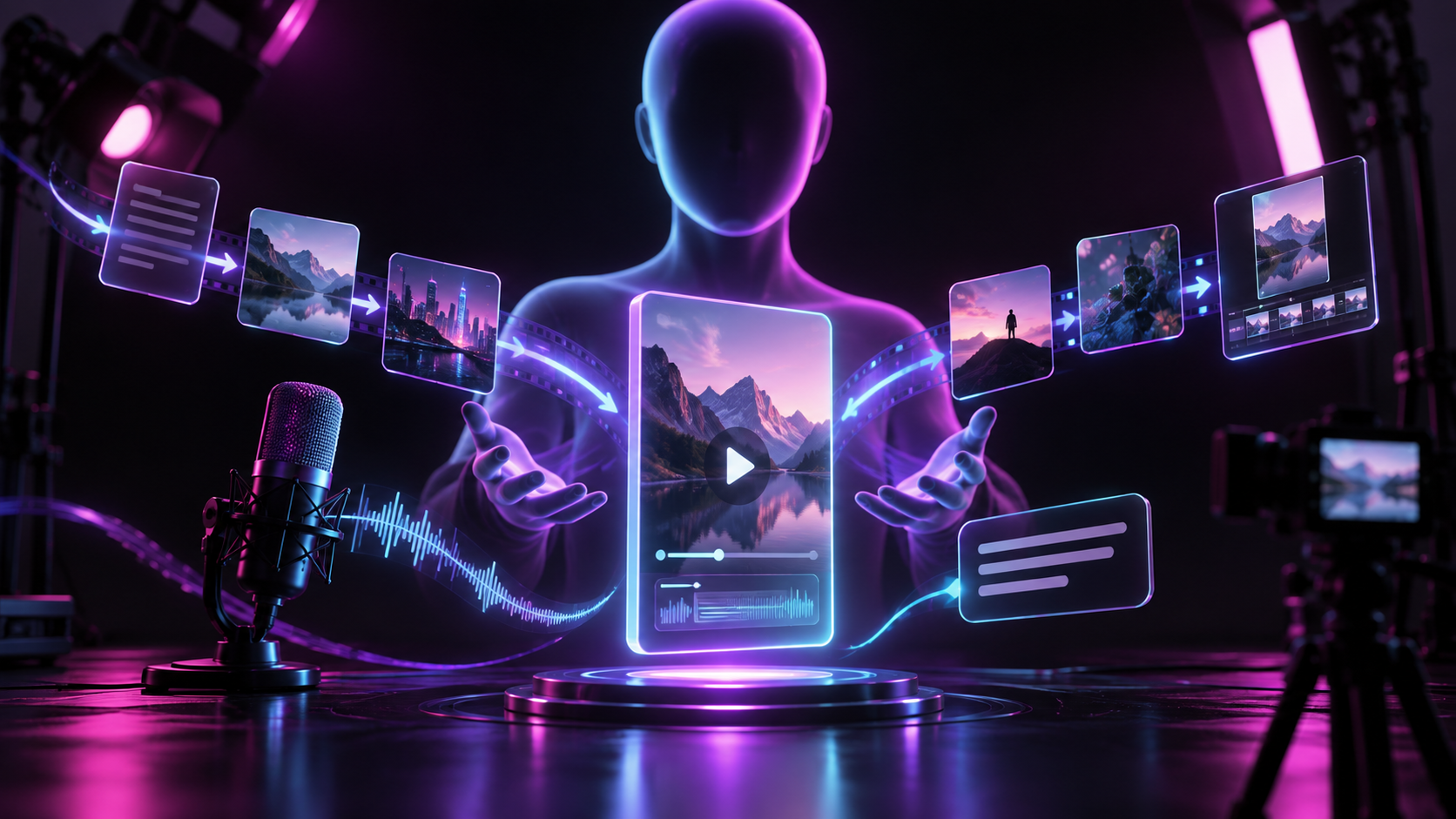
Step-by-Step Guide
Define Your Motivation Angle
Choose between success stories, self-help, fitness motivation, or entrepreneurship. Find your unique perspective.
Source & Write Stories
Collect real success stories from books, podcasts, and interviews. Write scripts with emotional arcs (5-minute stories work best).
Create Visuals
Use stock footage of nature, success, and lifestyle. Add text overlays with motivational quotes.
Record Warm Voiceovers
Use a narrator with encouraging tone. Motivation demands warmth and authenticity.
Engage & Build Community
Upload daily, interact with comments, and create community polls. Loyalty drives subscriber growth.
The 5-Step Workflow for AI Motivational Shorts
To make motivational shorts with AI, follow this five-step process: script writing, AI voiceover generation, sourcing stock footage, video assembly with captions, and platform optimization.
The entire workflow, from idea to a finished 60-second video, can take less than 20 minutes with the right tools.
The key is to automate the most time-consuming parts, voice recording and video editing.
For example, a creator can generate a script with ChatGPT-4o, produce a high-quality voiceover with ElevenLabs's API, and find royalty-free 4K drone footage on Pexels.
According to a 2025 HubSpot report, short-form video has the highest ROI of any social media marketing format, making this an efficient way to build an audience.
This method removes the need for expensive cameras or microphones, making high-frequency posting achievable for solo creators.
Step 1 & 2: Scripting and AI Voice Generation
A strong script is the foundation. Use a simple three-part structure: a hook (a relatable problem), the core message (a single piece of advice), and a call-to-action (e.g., "Follow for more").
You can use ChatGPT-4o with a prompt like, "Write five 45-second motivational scripts about overcoming procrastination for a YouTube Short." Once you have a script, select an AI voice generator. The choice of voice impacts the video's tone significantly.
For motivational content, deep and clear voices perform well. A VidIQ analysis from 2025 showed that Shorts with clear, authoritative narration have 35% higher average view duration.
Below is a comparison of popular text-to-speech tools as of Q2 2026:
| Tool | Pricing (Monthly) | Free Tier Details |
|---|---|---|
| ElevenLabs | $5 (Starter) | 10,000 characters/mo, 3 custom voices |
| Murf AI | $29 (Creator) | 10 mins voice generation, no downloads |
| Play.ht | $39 (Creator) | 12,500 characters (one-time), watermarked |
For most creators, the ElevenLabs Starter plan offers the best balance of quality and cost, providing enough credits for over 50 shorts per month.
Step 3: Sourcing High-Quality B-Roll Footage
The visual element of your short must match the script's energy.
Since you aren't filming, royalty-free stock video sites are essential.
Pexels and Pixabay are the two best sources for free, high-resolution (1080p and 4K) video clips that don't require attribution.
When searching, use cinematic keywords like "drone mountain sunrise," "slow motion rain," or "city time-lapse." A common mistake is using just one long clip.
Instead, download 3-5 different clips, each 5-10 seconds long, to create dynamic cuts every 2-4 seconds.
This technique, called "pattern interruption," is critical for holding viewer attention on platforms like YouTube Shorts and TikTok.
According to YouTube's official Creator Insider channel (January 2026 update), the first three seconds of a Short determine whether a user will swipe away, making a visually arresting opening shot crucial for performance.
Step 4: Assembling the Video and Adding Captions
With your voiceover and B-roll clips, it's time to assemble the final video. You can use a traditional editor like CapCut (mobile) or DaVinci Resolve (desktop), but AI-powered video editors streamline this process.
These tools can automatically find relevant stock footage based on your script and sync it to your voiceover. For example, a platform like FluxNote can take your script and audio file, automatically source matching clips from its integrated stock library, and generate animated captions in one step.
This reduces editing time from an hour to under five minutes. Regardless of the tool, adding captions is non-negotiable.
A 2025 Verizon Media study found that 80% of viewers who watch videos on mobile do so with the sound off. Use a large, bold font (like The Bold Font) and highlight keywords in a different color to maximize readability.
Step 5: Optimizing for YouTube's Algorithm
The final step is uploading and optimizing your short for discovery. The title is less important for Shorts than for long-form video, but the hashtags and audio are critical.
Use a mix of broad and niche hashtags. For a video about discipline, you might use `#motivation` (500M+ posts), `#discipline` (50M+ posts), and `#stoicism` (5M+ posts).
This strategy targets both high-volume and specific interest groups. Before publishing, check the YouTube Shorts trending audio library.
Adding a popular, low-volume sound behind your voiceover (at 1-5% volume) can significantly increase reach. According to the YouTube Creator Playbook (2026 edition), videos that use trending sounds are 2x more likely to be featured on the Shorts shelf.
Publish consistently, at least one short per day, to build momentum and signal to the algorithm that your channel is active.
Pro Tips
- Lead with emotional hooks: start each video with a relatable struggle before the payoff.
- Use slow background music with uplifting progressions.
- Include captions for key quotes, they get shared on social media.
- Create short clips (60-90 sec) for TikTok and Instagram Reels repurposing.
- Collaborate with life coaches and self-help authors for credibility.
Create Videos With AI
From inspiration to your own creation
Put your next idea into action.
Videos, images and ads. One creative studio. Pick what you want to make—or try the walkthrough before you sign up.
Your ideas. Your videos. No camera required.
Turn your next story into a faceless video. Explore the workflow, then create your own in FluxNote.
- 01 Choose a style
- 02 Add your idea
- 03 Make it your own
Start with an account. Create at your own pace.
Loading walkthrough… Full-screen link below if needed.
Tool access and generation allowances depend on your plan.
Frequently Asked Questions
Related Resources
- GuideHow to Make Faceless Educational Videos (2026 Guide)
- GuideHow to Make YouTube Shorts for a Meditation Channel (2026)
- ToolText to Video AI: Turn Text Into Videos [Fast]
- ToolAI Faceless Video Generator Guide | FluxNote
- GuideHow to Make Faceless Motivational Videos with AI
- GuideHow to Make Motivational Reels Without Showing Your Face
- ToolAI Motivational Video Maker [Viral]