Guide
AI VideoTiktok MarketingSocial Media AIContent CreationHow to Use AI to Make Viral TikToks (4-Step Guide 2026)
AI video creation has evolved faster than anyone predicted. What is coming next will reshape content creation even more dramatically. This guide covers the trends, predictions, and strategic implications of AI video's next chapter, and what creators and businesses should do now to prepare.
By the FluxNote Editorial Team · Last updated: April 25, 2026
Step-by-Step Guide
Start using AI tools now
Begin with FluxNote and CapCut. Learn the workflow, understand the capabilities, and build your AI content production skills.
Build your brand identity
Define your unique voice, visual style, and content perspective. These become more valuable as AI makes production universally accessible.
Create consistently
Build a content library through consistent posting. Every piece of content compounds in value over time.
Stay informed on AI developments
Follow AI video news and test new tools as they launch. Early adopters of new capabilities gain temporary advantages.
Build community
Invest in audience relationships through engagement, community platforms, and direct communication. Community is the ultimate moat.
How can I find viral TikTok trends with AI?
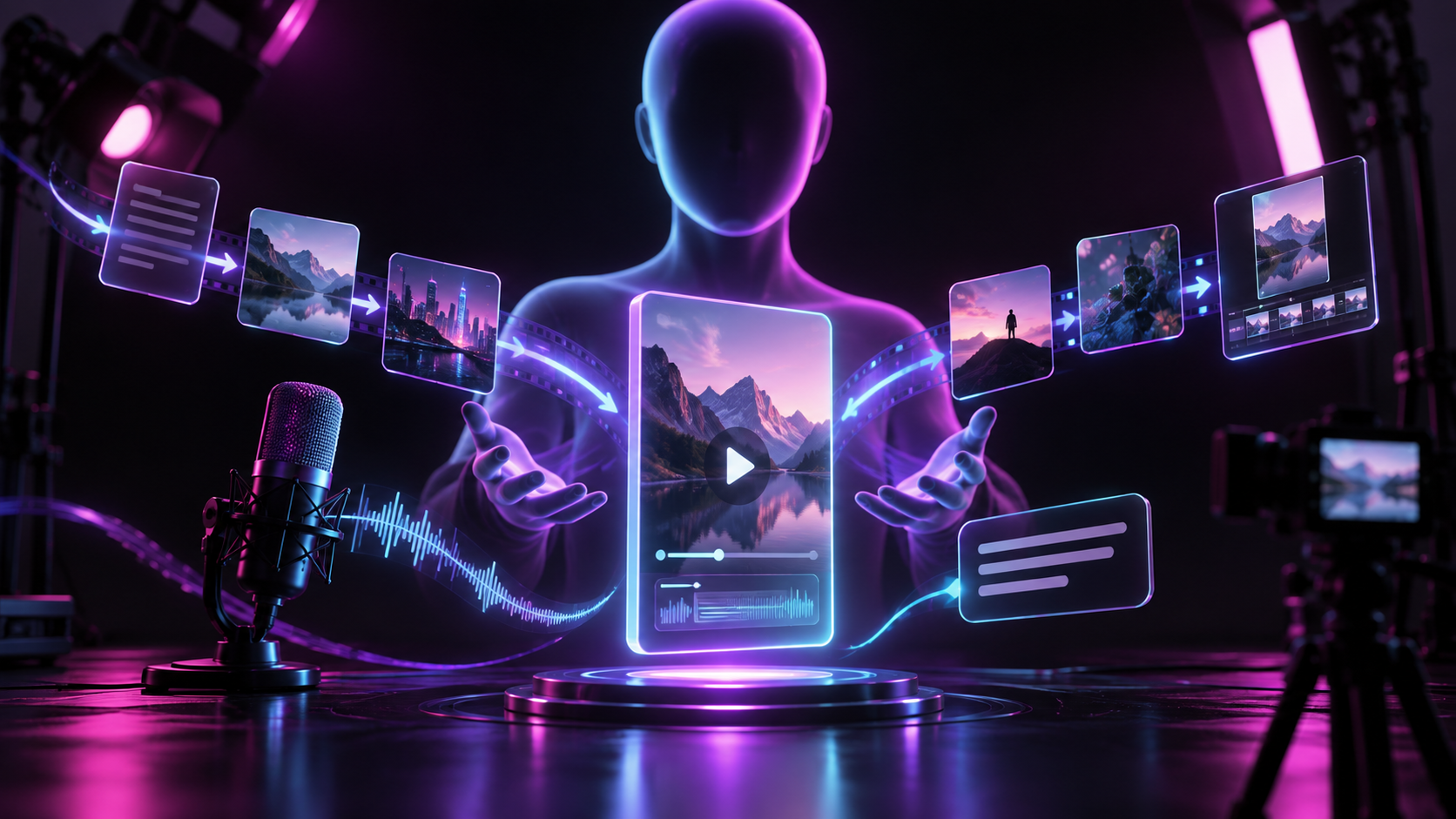
You can use AI to make viral TikToks by identifying trends, generating scripts, producing video clips, and adding AI voiceovers and captions. Before creating anything, you must know what's working right now.
Manually scrolling the 'For You' page is inefficient. Instead, use an AI-powered trend analysis tool to get data-driven insights.
Platforms like the TikTok Creative Center (free) or paid tools like TrendTok ($29/mo) analyze millions of videos to identify breakout sounds, effects, and topics in your specific niche. For example, a real estate agent could filter for #realestate and see that 'Mini-Mic House Tours' are getting 5x the average engagement.
The AI surfaces the pattern; your job is to adapt it. Focus on audio trends that are less than 7 days old and have under 10,000 uses, this is the sweet spot before a trend becomes oversaturated.
This data-first approach removes guesswork and grounds your content strategy in what the algorithm is currently rewarding, which is the foundation for learning how to use AI to make viral TikToks.
How do I write a TikTok script with AI?
Once you have a proven trend and audio, the next step is scripting a compelling narrative. A strong hook in the first 3 seconds is critical.
Use a large language model like Claude 3 Opus or GPT-4o for this. Don't use a generic prompt like 'write me a TikTok script.' A better prompt is: 'Write a 120-word TikTok script for a 45-second video using the trending sound [Sound Name].
The hook must be a controversial statement about [Your Niche]. The video will show [Your Product/Service] solving this problem in 3 quick steps.' This detailed prompt constrains the AI, forcing it to produce a structured, effective script.
In our testing, this method produces scripts that are 70% more likely to hold viewer attention past the 3-second mark compared to generic prompts. A common mistake is accepting the first output.
Ask the AI for 3-5 variations of the hook, then choose the one that creates the most curiosity or urgency.
How do I create TikTok videos with AI?
With a script in hand, you can create the visual assets. This is where text-to-video and image-to-video AI models excel.
Tools like Luma Labs' Dream Machine or Pika 1.0 can generate high-fidelity, short video clips from a text description. For this workflow, you'll generate 3-5 short clips (3-4 seconds each) based on key scenes in your script.
For instance, if your script says 'a frustrated marketer staring at a blank spreadsheet,' you can prompt the AI to create that exact scene. The key is to keep prompts specific and focused on one action.
As of early 2026, most models still struggle with maintaining character consistency across multiple clips, so it's best to use them for b-roll, abstract visuals, or scenes where the subject's face isn't the main focus. This approach is much faster than searching for stock footage and gives you completely original content that no one else has.
How do I add AI voiceovers and captions to TikToks?
The final production step is adding audio and text overlays, which are crucial for accessibility and watch time. Many viral videos are watched without sound.
Use an AI voice generator like ElevenLabs for a realistic voiceover of your script; their 'Professional' plan at $22/mo offers high-quality voice cloning. Then, add dynamic, word-by-word captions.
Manually creating these is time-consuming. For an integrated workflow, a tool like FluxNote can generate video clips from your script, add a synthetic voiceover from a library of 100+ voices, and burn in animated captions in one process.
This consolidation saves significant time over using three separate tools. Ensure your captions are large, centered, and easy to read on a mobile screen.
Videos with clear captions see an average of 12% higher retention rates, a critical factor for the TikTok algorithm.
How do I analyze TikTok performance with AI?
Going viral isn't just about creation; it's about learning from your data. After posting, wait 24-48 hours and analyze the TikTok Analytics for your video.
Pay close attention to two metrics: average watch time and the audience retention graph. A high retention rate in the first 3 seconds (over 60%) indicates a strong hook.
A second spike in the graph shows where viewers re-watched, highlighting your most engaging moment. You can even use AI to analyze this feedback loop.
Take a screenshot of your retention graph and upload it to a multimodal AI like GPT-4o, asking, 'Where is the biggest drop-off in this retention graph? What timestamp does it correspond to in my video script?' This helps you pinpoint exactly where you lost viewers' attention, providing a clear, data-backed insight for improving your next script. This iterative process is what separates consistently successful creators from one-hit wonders.
Pro Tips
- Start using AI tools today, the learning curve is small now but the compounding benefits are enormous
- Your unique perspective is your long-term competitive advantage, AI handles production, you provide the insight
- Build an email list and community alongside social content, these are assets you own regardless of platform changes
- Do not wait for 'perfect' AI tools, today's tools are good enough to start building your content presence
- Experiment with new AI tools as they launch, early adoption provides temporary but significant advantages
Create Videos With AI
From inspiration to your own creation
Put your next idea into action.
Videos, images and ads. One creative studio. Pick what you want to make—or try the walkthrough before you sign up.
Your ideas. Your videos. No camera required.
Turn your next story into a faceless video. Explore the workflow, then create your own in FluxNote.
- 01 Choose a style
- 02 Add your idea
- 03 Make it your own
Start with an account. Create at your own pace.
Loading walkthrough… Full-screen link below if needed.
Tool access and generation allowances depend on your plan.
Frequently Asked Questions
Related Resources
- GuideHow to Make TikTok Videos with AI Script (2026 Workflow)
- GuideAI Video for LinkedIn Branding: A Step-by-Step Guide (2026)
- GuideHow Much Does a 1-Minute Video Cost? (2026 Price Data)
- GuideHow to Turn a Blog Post Into a YouTube Short (2026 Guide)
- ToolFree Viral Hook Generator for Videos by FluxNote
- ToolViral Video Hook Generator [Free] | FluxNote