Guide
Youtube AutomationGuided MeditationFaceless Youtube ChannelText To SpeechHow to Make Guided Meditation Videos with AI (4 Steps)
Meditation is one of YouTube's highest-retention niches, viewers play 20-60 minute meditation videos on repeat, every day, driving enormous watch-time totals from a loyal audience that never stops growing. Because meditation content is purely audio-visual (calm voice, peaceful imagery, ambient music), AI generates it perfectly: FluxNote's Soft Natural style and calm soothing voice produce guided meditations that feel genuinely therapeutic, ready to publish in under 12 minutes.
By the FluxNote Editorial Team · Last updated: April 25, 2026
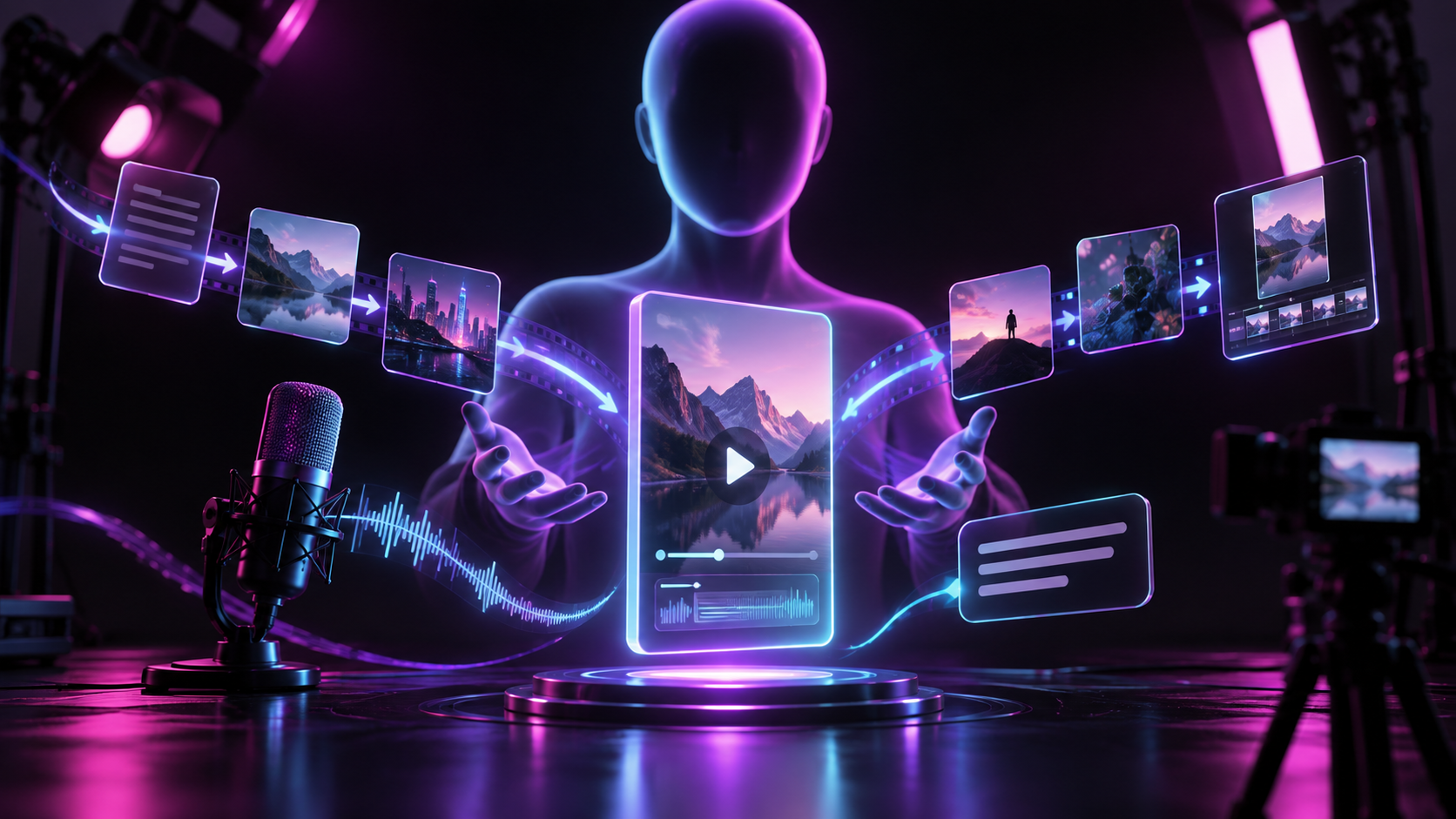
Step-by-Step Guide
Build your master topic list
Search YouTube autocomplete for 'meditation for [condition/time/practice]'. Check Insight Timer and Calm app category lists for gap topics. Use Google Trends to identify rising meditation searches (somatic healing, nervous system regulation, sleep anxiety). Build 100+ topics sorted by length (5-min, 10-min, 30-min, 1-hour) since length is a critical filter for meditation searchers.
Set up your FluxNote production queue
Queue meditations in length tiers: batch all 5-minute meditations together, then 10-minute, then 30-minute. Select Soft Natural visual style and calm soothing voice for all nature-based meditations. Set ambient music to low (voice should be 70% of mix for guided meditations). FluxNote processes a 20-video meditation batch in approximately 3 hours, ready to review and schedule.
Establish your publishing schedule
Publish one meditation video daily, alternating between morning content (published at 5am to catch early risers) and sleep content (published at 8pm to catch evening viewers). Consistency at these hours creates habitual viewing, your channel becomes part of viewers' daily routines, dramatically increasing subscriber loyalty and daily return rate.
Optimize for search with niche-specific SEO
Include the exact duration in every title: '10-Minute Morning Meditation for Anxiety'. Add the condition or intent in the first five words. Tags should include: the duration, the condition (anxiety, sleep, stress), the practice type (guided, breathwork, visualisation), and the time of day. Use descriptions to include the full meditation script text, this dramatically boosts Google search indexing.
Track performance and double down on winners
After 60 days, identify which meditation types drive the most total watch time (not just views). Sleep meditations typically have the highest per-video watch time. Double production for your top-performing conditions and time windows. Create extended versions of your most-watched videos (if '10-min anxiety' is your top performer, create a 20-min and 30-min version to capture longer-session searchers).
Step 1: Generate Your Script & AI Voiceover
Begin by creating a 5 to 10-minute guided meditation script. You can use a model like GPT-4o to generate a script focused on a specific theme, such as 'mindfulness for anxiety.' The next critical step is the voiceover.
Your choice of AI voice determines the quality of the final product. Tools like ElevenLabs are a frequent choice; their Creator plan at $22/month provides access to high-fidelity voices with natural intonation.
For a specific example, you can use their 'Serene' pre-set voice, which is trained for a calm delivery. After generating the script, you feed it into the voice generator and download the audio, typically as a 192kbps MP3 file.
Another option is Murf.ai, whose Pro plan ($49/mo) includes a library of voices suitable for wellness content. The goal is a clear, evenly paced audio file that will be the foundation of your video.
Step 2: Source Royalty-Free 4K Nature Footage
The visual component must be tranquil and high-resolution.
While free stock sites exist, their most popular clips are overused on meditation channels, which can make your content appear generic.
For a professional look, consider a subscription service like Artgrid.io, which costs around $25/month for their Junior 4K plan.
This gives you access to cinematic-quality footage of oceans, forests, and sunsets that isn't saturated on YouTube.
When selecting clips, look for slow-moving or static shots that are at least 30 seconds long to minimize jarring cuts.
As of Q2 2026, AI video generation tools like Pika 2.0 or Luma are excellent for short, abstract visuals but struggle to produce a continuous 10-minute, photorealistic nature scene without artifacts.
For long-form meditation videos, professionally shot stock footage remains the most reliable option for maintaining viewer immersion.
Step 3: Combine Audio, Video, and Captions
With your audio and video files ready, the next step is assembly. You can use a video editor like CapCut (which has a capable free desktop version) or DaVinci Resolve.
Import your 4K video clips and lay them on the timeline. Then, import your AI-generated MP3 voiceover and place it on a separate audio track.
A crucial technical step is audio normalization; adjust the voiceover track's gain so its peak volume is around -3dB. This ensures a consistent, comfortable listening experience without digital clipping.
Next, add soft, ambient background music at a much lower volume, around -18dB. Finally, generate captions.
CapCut's 'Auto captions' feature can transcribe your voiceover in seconds. Captions significantly improve accessibility and viewer retention, as many people watch videos on mute.
Review the generated captions for accuracy before exporting your final video file in 4K resolution (3840x2160).
Step 4: Streamline the Workflow with an Integrated Tool
Manually managing separate tools for scripting, voice generation, video sourcing, and editing can take over an hour for a single 10-minute video.
An integrated platform can reduce this production time significantly.
For creators looking to produce content at scale, a tool that combines these steps is more efficient.
For instance, a platform like FluxNote allows you to generate a script, create a voiceover with a premium AI voice, access a library of stock footage, and assemble the final video with captions all within a single browser tab.
This approach can condense the entire workflow from script to final render to under 20 minutes.
This speed is a major advantage for creators aiming to publish new meditation videos daily or weekly, allowing them to focus more on content strategy and less on repetitive production tasks.
The key is finding a workflow that balances quality with production speed.
Monetization Models for Meditation Channels in 2026
Relying solely on YouTube AdSense for a new channel is a slow path to revenue. To monetize effectively, diversify your income streams from day one.
One popular method is affiliate marketing. You can partner with wellness brands through networks like ShareASale and include affiliate links in your video descriptions for products like yoga mats or essential oil diffusers.
A second model is selling your own digital products. Once you have a small audience, you can package your guided meditation audio files as MP3 bundles and sell them on platforms like Gumroad, which takes a 10% platform fee on sales.
A third option is direct audience support through Patreon. You can offer exclusive, longer meditations or ad-free versions of your videos to patrons who subscribe for $5 or $10 per month.
Patreon's Pro plan charges an 8% platform fee plus payment processing. These direct-to-consumer models often generate more income than AdSense in the first 12 months.
Pro Tips
- Always include the duration prominently in the first three words of your title, '10-Minute Morning Meditation' is searched far more often than 'Morning Meditation' because viewers want to know the time commitment before clicking. This single adjustment can double your CTR.
- Add a brief 60-second introduction before every meditation explaining exactly what benefit the viewer will experience. This reduces early abandonment and helps with watch-time because viewers who understand the session's purpose are more committed to completing it.
- Create 'meditation series' playlists: a 7-day morning meditation challenge, a 14-day anxiety reduction series, a 7-day mindfulness course. Series playlists dramatically increase session time per visit and subscriber conversion because viewers return daily to continue the series.
- Post a new sleep meditation every Sunday, search for sleep content spikes on Sunday evenings across all demographics. Making Sunday your sleep-meditation day creates a predictable audience return pattern and improves weekly subscriber count.
- Include nature sound variants of your most popular meditations. If '10-min anxiety meditation' performs well, create versions with rain sounds, forest sounds, ocean waves, and white noise. Each variant targets a different search segment and collectively multiplies the total views from a single core meditation concept.
Create Videos With AI
From inspiration to your own creation
Put your next idea into action.
Videos, images and ads. One creative studio. Pick what you want to make—or try the walkthrough before you sign up.
Your ideas. Your videos. No camera required.
Turn your next story into a faceless video. Explore the workflow, then create your own in FluxNote.
- 01 Choose a style
- 02 Add your idea
- 03 Make it your own
Start with an account. Create at your own pace.
Loading walkthrough… Full-screen link below if needed.
Tool access and generation allowances depend on your plan.
Frequently Asked Questions
Related Resources
- GuideHow to Make Faceless Cooking Videos (4 Ways in 2026)
- GuideHow to Make Quotes Videos for YouTube Shorts (5 Steps)
- GuideFaceless Meditation YouTube Channel [2026 Guide]
- GuideCreate Rain Videos for YouTube Without Copyright
- GuideTop 10 Faceless YouTube Niches [2026 Tested]
- BlogHow to Start a Faceless YouTube Channel With AI in 2026 (Step-by-Step)
- GuideCreate Guided Meditation Videos with AI (2026 Guide)