Guide
Faceless Youtube ChannelMovie RecapYoutube ShortsAI Video CreationHow to Create Faceless Movie Review Videos (4 Steps) 2026
Movie and film review content is one of the most culturally relevant niches on YouTube. Every major film release drives millions of searches, and streaming platforms create year-round demand for content reviews. Channels like Chris Stuckmann, Jeremy Jahns, and Karsten Runquist have built large audiences through consistent, personality-driven reviews. CPMs range from $6-$18, and while the niche is competitive, the constant stream of new content creates perpetual opportunities for fresh voices.
By the FluxNote Editorial Team · Last updated: April 25, 2026
Step-by-Step Guide
Define your critical perspective
What do you value most in film? Story, direction, performances, cinematography, cultural relevance? Your perspective becomes your brand.
Develop a consistent review format
Create a repeatable structure: summary (spoiler-free), analysis, rating. Consistency helps viewers know what to expect and builds reliable viewing habits.
Cover both new releases and evergreen analysis
Timely reviews of new releases drive traffic spikes. Evergreen analysis essays provide consistent baseline views. You need both for a sustainable channel.
Build your fair use knowledge
Understand fair use principles for film criticism. Use clips sparingly, always with substantive commentary that transforms the material. Document your fair use reasoning for disputes.
Engage the film community
Join Letterboxd, participate in film discussions on Reddit (r/movies, r/TrueFilm), and collaborate with other film creators. The film community is highly interconnected and collaborative.
A 4-Step Workflow for Faceless Movie Reviews
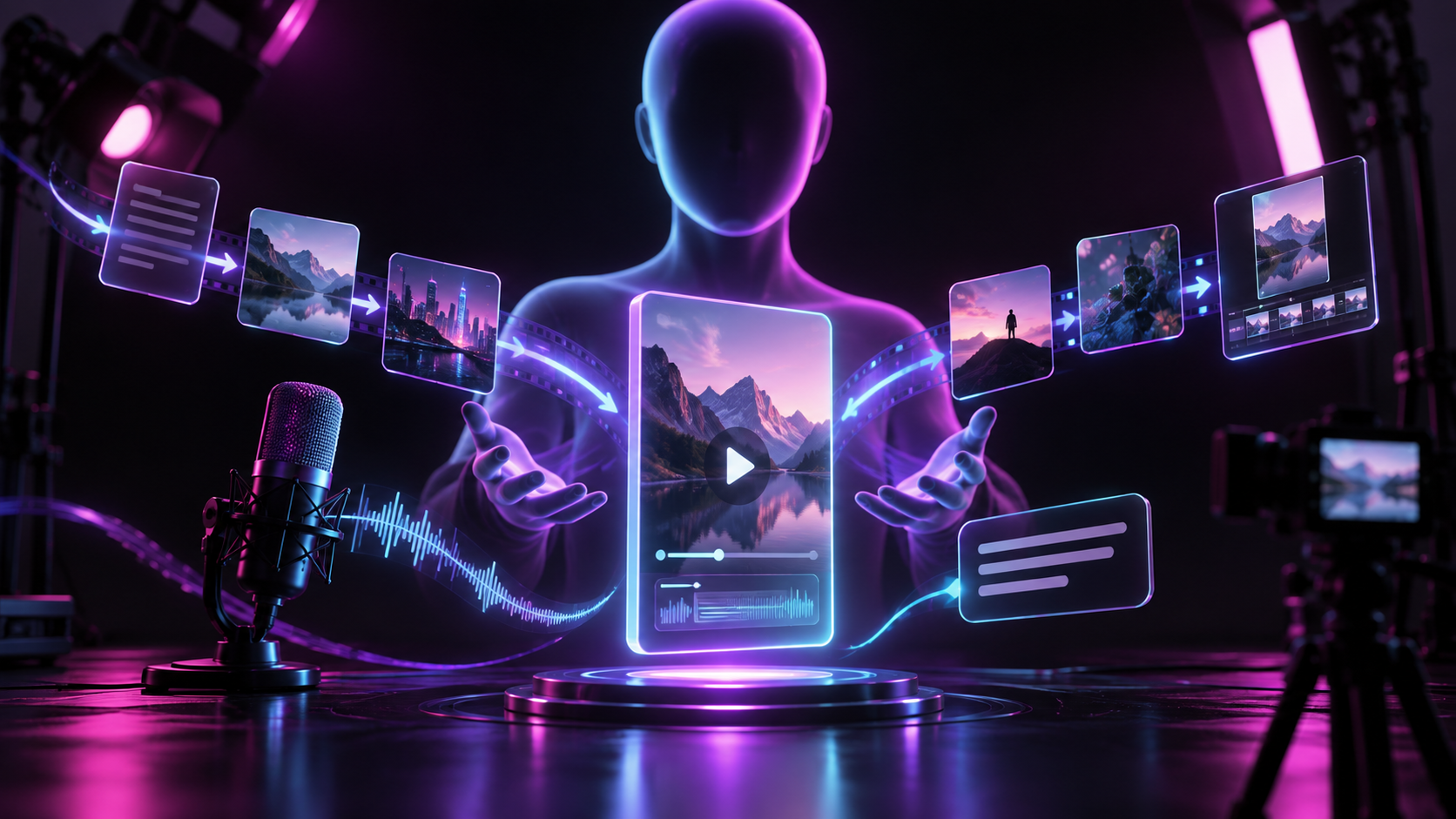
To create faceless movie review videos, follow a four-step process: write a script, generate an AI voiceover, gather B-roll and movie clips, and assemble with captions.
This method allows creators to produce content quickly without on-camera work.
Channels like 'Cinema Summary' have gained over 1 million subscribers with this exact format (YouTube data, 2026).
The foundation is a concise script, typically 150-180 words for a 60-second YouTube Short. Next, use an AI voice generator like ElevenLabs or Play.ht to produce a clean narration track.
For visuals, combine short, transformative movie clips with copyright-free stock footage from sites like Pexels. Finally, edit these elements together in a 9:16 vertical format, adding prominent, animated captions that are readable on mobile devices.
This entire process can be completed in under 60 minutes once a workflow is established.
Writing a Script Optimized for AI Narration
A strong script is the most important part of a faceless review. Structure your script with a 3-second hook, a 40-second summary and analysis, and a 10-second concluding thought or rating.
Aim for a word count between 150 and 180 words for a standard 60-second video. This pacing keeps viewer retention high, a key metric for the YouTube Shorts algorithm.
When writing, use clear, simple sentences. AI voices can sound unnatural with complex clauses.
Tools like the Hemingway App can help simplify your text to a 7th or 8th-grade reading level, which improves narration quality. A non-obvious detail is to write for a specific AI voice's cadence; some voices handle pauses and inflections better than others.
Test your script with a few voice options before committing to the final narration. Remember to read the script aloud yourself to catch awkward phrasing that an AI might struggle with.
This quality check takes less than two minutes and significantly improves the final audio.
Sourcing Visuals & Avoiding Copyright Strikes
Sourcing visuals is the step where creators face the most risk. To comply with fair use principles, your use of movie clips must be transformative.
This means you are adding new meaning or commentary, not just re-uploading scenes. Keep individual clips under 5 seconds, and ensure your voiceover is always present.
Never show pivotal plot points in their entirety. YouTube's Content ID system automatically scans over 100 years of video content every day (Google AI Blog, 2025), so manual adherence to fair use is critical.
Supplement movie clips with other visuals to reduce the percentage of copyrighted material in your video. Official movie trailers, which are intended for promotion, are generally safer to use in short segments.
Also, integrate high-quality stock footage from libraries like Pexels and Pixabay for abstract concepts or transitions. A balanced video might be 40% movie clips, 30% trailer footage, and 30% stock B-roll.
| Visual Source | Risk Level | Best Practice |
|---|---|---|
| :--- | :--- | :--- |
| Movie Clips | High | Under 5s, with commentary |
| Official Trailers | Medium | Under 10s, for context |
| Stock Footage | Low | Use for transitions, intros |
| Production Stills | Low | Use with zoom/pan effects |
Generating AI Voice & Assembling the Video
High-quality audio is essential for viewer retention. Modern AI voice generators can produce narration that is nearly indistinguishable from human speech.
Top-tier AI voices from providers like Play.ht achieve a 95% human-likeness score in listener studies (Stanford HAI Report, 2025). When selecting a tool, consider the voice library and character limits.
For example, ElevenLabs offers a free tier with 10,000 characters per month (ElevenLabs pricing, 2026), which is enough for about twelve 60-second videos.
Once you have your audio file, import it into a video editor along with your visual clips. The editing process involves syncing the right clip to the corresponding part of the narration.
For an integrated workflow, a tool like FluxNote combines AI voice generation, stock footage libraries, and automated captioning in one place, starting from its free plan. The final step is adding animated captions.
Since many users watch Shorts with the sound off, clear, dynamic captions can increase watch time by over 30%.
Optimizing Your Video for YouTube Shorts Discovery
Proper optimization ensures your video reaches its target audience. Always export in a 9:16 aspect ratio with a resolution of 1080x1920 pixels.
The title of your Short should be engaging and include the movie's name, like "Did You Catch This Detail in Dune 2?" or "Explaining the Ending of Inception." In the description, use 3-5 relevant hashtags. A good combination is one broad tag (#moviereview), one specific tag (#interstellar), and one niche tag (#filmrecap).
A critical detail for the Shorts algorithm is immediate engagement. The first 3 seconds must grab the viewer's attention.
Use your script's hook and the most visually interesting clip at the very beginning. Unlike long-form videos, Shorts thumbnails are chosen by YouTube from a frame in the video, so you cannot upload a custom one.
This makes the opening visual even more important. Finally, create a consistent posting schedule, such as one new Short per day, to build momentum and train the algorithm on your channel's topic.
Pro Tips
- Opening weekend reviews should be published within 24-48 hours of a major release, speed matters enormously for timely film content
- Award season (October-March) drives the highest-quality film content demand, cover Oscar contenders and predictions for engaged, high-value audiences
- Video essays analyzing themes, techniques, or cultural impact get shared far more than simple reviews, invest in this format for growth
- Create a clear, recognizable rating system (letter grades, numbered scores, tier lists) that viewers can reference and argue about, rating systems create engagement
- Be willing to disagree with popular consensus, 'Unpopular opinion' content drives massive engagement and establishes you as an independent voice
Create Videos With AI
From inspiration to your own creation
Put your next idea into action.
Videos, images and ads. One creative studio. Pick what you want to make—or try the walkthrough before you sign up.
Your ideas. Your videos. No camera required.
Turn your next story into a faceless video. Explore the workflow, then create your own in FluxNote.
- 01 Choose a style
- 02 Add your idea
- 03 Make it your own
Start with an account. Create at your own pace.
Loading walkthrough… Full-screen link below if needed.
Tool access and generation allowances depend on your plan.
Frequently Asked Questions
Related Resources
- GuideHow to Create Faceless Finance Videos for YouTube (2026)
- GuideHow to Create Faceless Psychology Videos (2026 Guide)
- ToolText to Video AI: Turn Text Into Videos [Fast]
- ToolAI Faceless Video Generator Guide | FluxNote
- GuideBollywood Reviews YouTube Channel [2026]: OTT Era
- GuideHow to Make Faceless Movie Review Videos (4-Step Guide)
- ToolAI Movie Maker Guide | FluxNote