Guide
Faceless VideosTiktok AutomationShort Form VideoContent CreationHow to Create Faceless TikTok Videos with AI (2026 Guide)
Top 10 list videos are the bread and butter of faceless YouTube. They are easy to produce, highly searchable, and generate strong engagement through their predictable structure.
By the FluxNote Editorial Team · Last updated: April 25, 2026
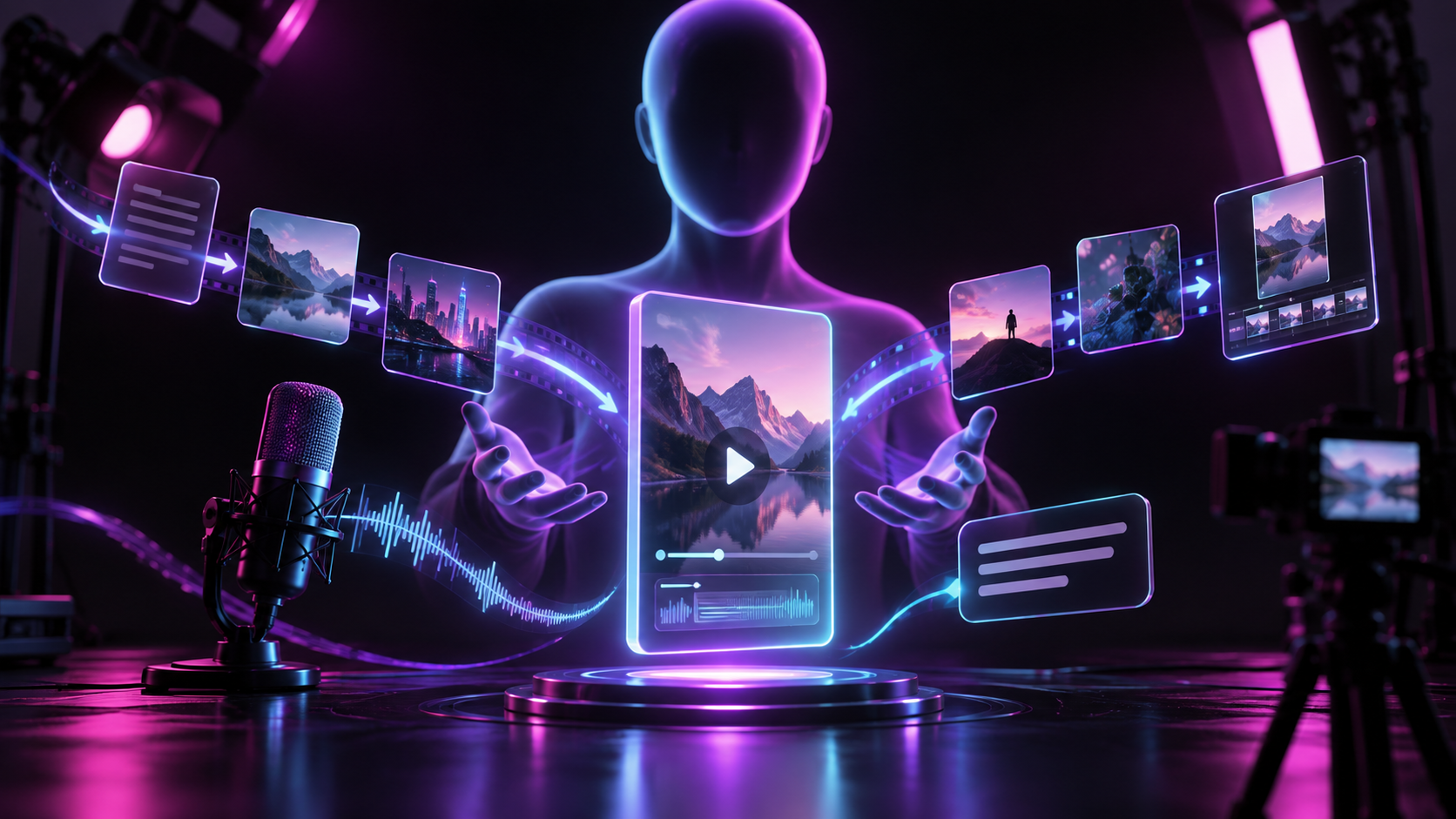
Step 1: Generate Your Video Script with AI
The foundation of a great faceless video is a concise script. To learn how to create faceless TikTok videos with AI, you first need the text.
Use a large language model like Claude 3 Sonnet or ChatGPT-4o to generate this content instantly. For a 60-second TikTok, aim for a script of 130-150 words.
Provide a clear prompt, such as: "Write a 140-word script for a TikTok video titled 'Three Ancient Roman Habits We Still See Today'. Make it engaging, fast-paced, and end with a question." The AI can produce a structured script with an introduction, three points, and a call-to-action in less than 30 seconds.
Review and edit the output for factual accuracy and tone before proceeding to the voiceover stage.
Step 2: Produce a Clear AI Voiceover
A human-like voiceover is critical for holding viewer attention. Modern text-to-speech (TTS) platforms like ElevenLabs or PlayHT can convert your script into high-quality audio.
The free plan on ElevenLabs, as of Q1 2026, includes 10,000 characters per month, which covers approximately 30 one-minute videos. When generating, select a voice that matches your topic's tone, a 'conversational' or 'storyteller' style often works best.
A key detail is to add punctuation like commas and periods to your script to create natural-sounding pauses in the audio. Download the final audio as an MP3 file, ready for the video assembly step.
Always listen to the full audio file once to catch any mispronunciations.
Step 3: Source High-Quality B-Roll Footage
Your visuals must be dynamic to prevent viewers from scrolling away. For each point in your script, find relevant stock video clips.
Free resources like Pexels and Pixabay offer millions of clips without attribution requirements. For a 60-second video, you'll need between 10 and 15 different clips, each lasting 3-5 seconds on screen.
This rapid pacing is essential for the TikTok platform. When searching, use specific keywords related to your script, like "Roman Colosseum drone shot" or "ancient scroll unfurling." Download all clips in the same aspect ratio (9:16 for TikTok) and resolution (1080p is sufficient) to maintain visual consistency and simplify the editing process.
Step 4: Assemble the Video with an AI Editor
This is where the script, voiceover, and footage come together. AI video platforms are designed to automate this process.
You upload your voiceover and script, and the software analyzes the text to find and sync relevant clips from a stock library. Tools like Pictory are popular for this, with plans starting at $19 per user/month.
Some platforms are built specifically for short-form content. For example, a tool like FluxNote can generate a fully edited TikTok from a script in under five minutes by automatically selecting clips, timing them to the voiceover, and adding animated captions.
This approach reduces manual editing time from hours to minutes, allowing for consistent daily content production.
Step 5: Add Captions and Optimize for TikTok
Over 85% of social media videos are watched with the sound off, making captions non-negotiable. While TikTok has a native auto-caption feature, burning captions directly into your video file gives you more control over style and placement.
Video editors like CapCut offer excellent auto-captioning functions for free. A crucial, often overlooked detail is the 'safe zone'.
Keep your captions and any key text away from the very top and bottom 15% of the screen, as TikTok's interface elements (username, description, like button) will cover them. Use a bold, sans-serif font with a high-contrast outline or background for maximum readability on small mobile screens.
Once rendered, your video is ready to upload.
Create Videos With AI
From inspiration to your own creation
Put your next idea into action.
Videos, images and ads. One creative studio. Pick what you want to make—or try the walkthrough before you sign up.
Your ideas. Your videos. No camera required.
Turn your next story into a faceless video. Explore the workflow, then create your own in FluxNote.
- 01 Choose a style
- 02 Add your idea
- 03 Make it your own
Start with an account. Create at your own pace.
Loading walkthrough… Full-screen link below if needed.
Tool access and generation allowances depend on your plan.
Frequently Asked Questions
Related Resources
- GuideHow to Create Amazon Product Review Videos with AI (2026)
- GuideHow to Create Faceless Videos for TikTok (4-Step Guide 2026)
- ToolText to Video AI: Turn Text Into Videos [Fast]
- ToolAI Faceless Video Generator Guide | FluxNote
- GuideHow to Create Faceless AI Videos for TikTok (2026 Guide)
- ToolHow to Schedule TikTok Posts Free with FluxNote Scheduler