Guide
Youtube ShortsAI VideoAutomationFaceless ChannelFaceless YouTube Shorts Automation: A 5-Step Guide (2026)
The first 1.5 seconds of a YouTube Short determine whether your video reaches 500 people or 500,000. For faceless channels without a recognizable face to anchor attention, the hook, both visual and verbal, carries even more weight. This guide provides 15 battle-tested hook formulas specifically designed for faceless Shorts, with real examples and performance data from 2026.
By the FluxNote Editorial Team · Last updated: April 25, 2026
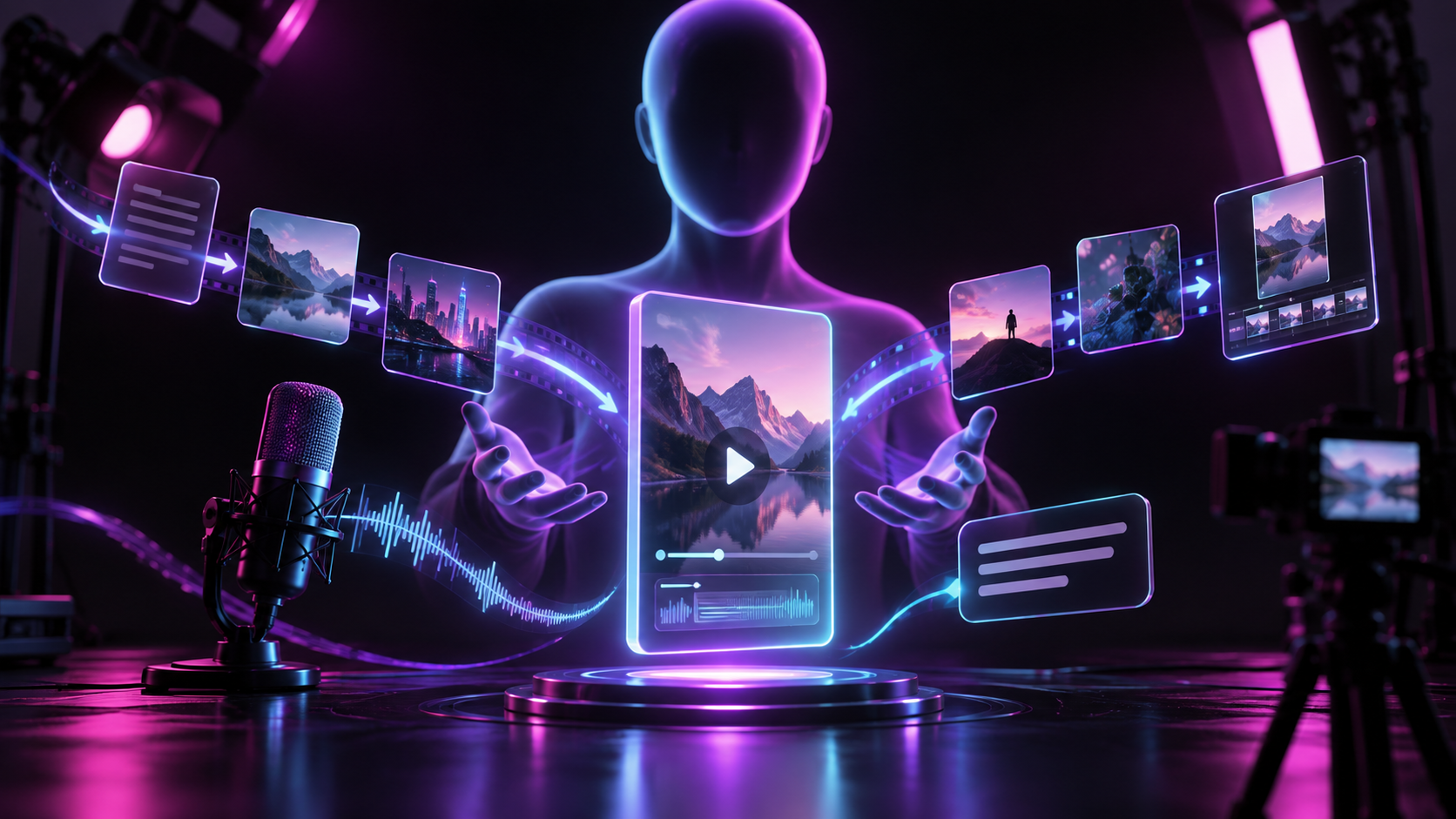
The Core Automation Workflow Explained
Faceless YouTube Shorts automation is a four-stage process: AI script generation, AI voiceover creation, AI-assisted video assembly, and automated scheduling.
The goal is to produce high-quality, 60-second videos with minimal manual input.
A typical workflow uses ChatGPT-4o for scripts, an AI voice tool like ElevenLabs for narration, a video generator for visuals and captions, and a scheduler like Buffer for publishing.
This system can reduce production time per video from over an hour to under 10 minutes.
This approach is not about creating spam.
It's a system for efficiently producing valuable content in niches like history facts, psychology tips, or product explainers.
The key is a well-defined production line.
For instance, a creator can generate 30 script ideas with one prompt, feed them into a voice generator to get 30 audio files, and then assemble each video using stock footage and animated captions.
According to a 2025 TubeBuddy survey, 65% of full-time creators report feelings of burnout, making automation a critical strategy for sustainable channel growth.
The most successful automated channels maintain quality by focusing on excellent scripts and crisp audio narration, which AI tools can now provide at a low cost.
Step 1 & 2: AI Scripting and Voice Generation
The foundation of an automated Short is the script and voiceover. For scripts, use a large language model like ChatGPT-4o or Claude 3 Sonnet.
A successful prompt is specific: "Act as a scriptwriter for a 55-second YouTube Short about a surprising historical fact. Write in a conversational tone, use simple language, and end with a question to the audience." This produces content that fits the platform's style.
For voiceovers, dedicated AI voice generators offer superior quality. ElevenLabs' Starter plan provides 30,000 characters (about 250 Shorts) for $5 per month.
Play.ht offers higher quality voices but at a higher price point of $39/mo for 100,000 characters (Play.ht pricing, Q1 2026).
The most common mistake is using a generic, robotic text-to-speech voice. As of 2026, listeners can easily detect low-quality AI audio, which harms watch time.
The goal is to select a voice that sounds natural and matches the content's tone. Test a few voices and stick with one for brand consistency.
A non-obvious detail is audio pacing; ensure there are 1-2 second pauses between major points in the script to allow for visual transitions in the video editing stage.
Step 3: AI Video Assembly with Stock Footage & Captions
Once you have your script and audio, the next step is generating the video. AI video tools connect to stock footage libraries like Pexels, Storyblocks, and Pixabay to find relevant clips for your narration.
The tool analyzes your script and automatically places b-roll that matches keywords in the text. This single step saves hours of manual searching and editing.
Captions are not optional for Shorts; 85% of social media videos are watched without sound (Instapage report, 2024). An automated tool must provide animated, easy-to-read captions.
When comparing video assembly tools, check these three features:
| Feature | Basic Tool | Advanced Tool |
|---|---|---|
| Stock Library | Pexels/Pixabay (Free) | Storyblocks/Getty (Premium) |
| Caption Style | 1-2 basic styles | 10+ customizable styles |
| Render Speed | ~5 minutes per Short | <90 seconds per Short |
For example, a basic tool might find a generic clip for the word "money," while a premium integration could find a more specific clip of "18th-century gold coins" if your script requires it. The quality of the stock footage integration directly impacts the final video's professional appearance and audience retention.
Step 4: Choosing Your Automation Tool Stack
You have two primary options for your tool stack: an all-in-one platform or a custom stack of specialized tools.
A custom stack involves using separate services, like ChatGPT for scripts, ElevenLabs for voice, and CapCut for editing, and manually moving assets between them.
This offers maximum control but is the least automated.
For more advanced automation, you can use an integration platform like Zapier to connect the APIs of these services, but this requires technical skill and can cost over $50/mo.
For most creators, an all-in-one platform is the most efficient starting point.
These platforms combine script helpers, AI voices, stock footage libraries, and captioning into a single interface.
For example, a platform like FluxNote provides text-to-video generation with integrated AI voices and premium stock footage for a single monthly fee of $10, eliminating the need to manage three separate subscriptions.
This integrated approach simplifies the workflow, making it possible to go from idea to finished video in one session.
Step 5: Scheduling, Publishing & Avoiding Policy Issues
The final step is publishing. To maintain a consistent posting schedule without daily effort, use a social media scheduling tool like Buffer or Later.com.
You can batch-produce a week's worth of Shorts in one afternoon and schedule them to go live at peak viewing times. This consistency is a key signal to the YouTube algorithm.
However, automation comes with risks. YouTube's spam policy targets "low-quality, repetitious content." To avoid getting your channel flagged, you must introduce variation.
Never upload the exact same video twice. Ensure each script is unique, and use different background clips and music tracks.
A good rule of thumb is the 20% rule: each new video should have at least 20% different visual elements from the previous one. Another common pitfall is using copyrighted music; always use royalty-free tracks provided by your video tool or YouTube's own audio library.
Neglecting these rules is the fastest way to get an automated channel shut down.
Create Videos With AI
From inspiration to your own creation
Put your next idea into action.
Videos, images and ads. One creative studio. Pick what you want to make—or try the walkthrough before you sign up.
Turn your idea into a recurring series.
Explore creating and scheduling an AI-generated series in FluxNote. Choose your direction and review the setup before starting.
- 01 Choose your series
- 02 Customize the setup
- 03 Set your schedule
Start with an account. Create at your own pace.
Loading walkthrough… Full-screen link below if needed.
Tool access and generation allowances depend on your plan.
Frequently Asked Questions
Related Resources
- GuideFaceless YouTube Niches with High CPM (2026 Data & Ideas)
- GuideFaceless YouTube: $10K/Month Income Plan
- GuideFaceless Shorts Algorithm 2026: [Viral Secrets]
- GuideHow to Create Faceless Shorts with AI (4-Step Guide 2026)
- GuideText Overlay Tips for Faceless Shorts [Boost Views 2026]
- ToolFaceless YouTube Automation with AI | FluxNote
- GuideFaceless YouTube Channel Automation: A 4-Step Workflow (2026)