Guide
ShopifyAi video generatorProduct videoEcommerce marketingHow to Make Product Videos for Shopify with AI (2026 Guide)
Video advertising for dutch ecommerce in Netherlands is fundamentally different from US or UK campaigns. The Netherlands has the highest eCommerce penetration in Europe (95% of internet users shop online) with the most price-sensitive and comparison-shopping savvy consumers in the EU, Dutch consumers sp. This guide covers what actually converts.
By the FluxNote Editorial Team · Last updated: April 25, 2026
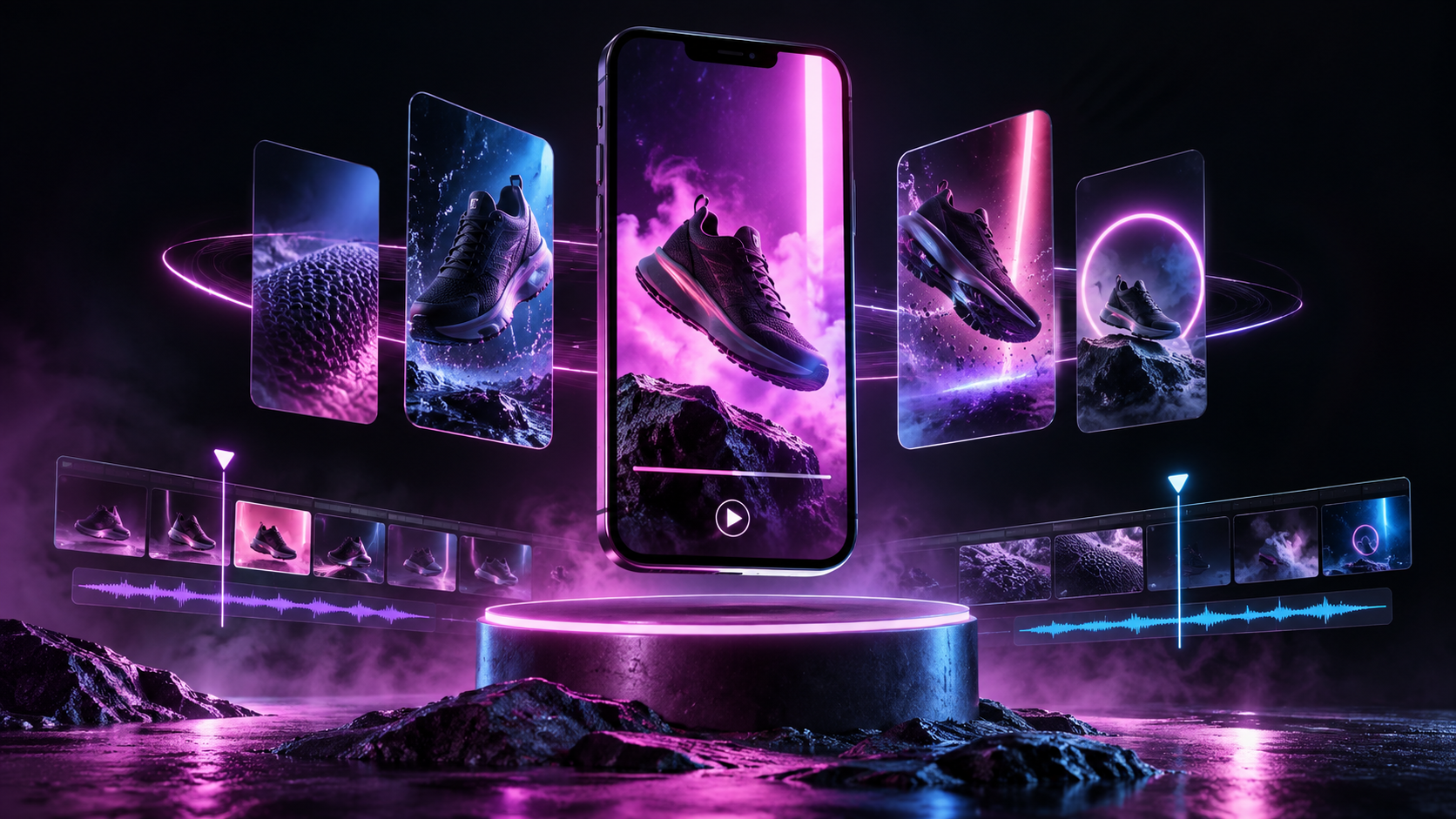
AI Video Workflow for Shopify Stores
To make product videos for Shopify with AI, you connect a generator tool to your store, select a product, and the AI pulls images and text to create a video in minutes.
Leading tools like Vidoo and Provid.ai offer direct Shopify integration, generating videos automatically.
The process typically takes less than 5 minutes per product, a 95% time reduction compared to manual editing.
First, you authorize an AI video app from the Shopify App Store, which grants it access to your product catalog. Second, you select a product or collection to create videos for.
The AI analyzes your product title, description, and images. Third, it generates a video draft using pre-designed templates, often adding AI voiceovers and stock music.
Finally, you can publish the video directly to the product page's media gallery. According to ZIK Analytics (2026), video ads generate up to 3x more clicks than static images for Shopify stores, making this a high-impact activity.
The primary benefit is scaling video production without needing any video editing experience or expensive equipment.
Comparing Top AI Video Apps for Shopify
Shopify merchants have several AI video apps to choose from, each with different pricing and features. The main trade-off is between full automation and creative control.
Tools are typically priced per video or on a monthly subscription. For instance, Provid.ai's plan costs $29.99/month for 100 AI videos (Provid.ai Shopify App, 2026), while others operate on credits.
Here is a comparison of three popular options available in the Shopify App Store as of April 2026:
| Tool | Pricing Model | Key Feature |
|---|---|---|
| Vidoo | Subscription | Daily auto-creation & posting |
| Provid.ai | Subscription ($29.99/mo) | Bulk video creation with AI voiceovers |
| Vidify | Per Video / Subscription | Image-to-video from a single photo |
When selecting a tool, consider your product volume. If you have hundreds of SKUs, a bulk creation tool like Provid.ai is more efficient.
For stores with visually distinct products, a tool like Vidify that animates a single hero image might be sufficient. A key nuance is how these apps handle product variants; some create separate videos for each color or size, while others group them into one showcase video.
Always check the app's documentation for its specific behavior on variant handling before committing to a paid plan.
From Product URL to Video Ad in 4 Steps
The fastest method for creating Shopify product videos is the 'URL-to-video' workflow. This process uses AI to scrape your live product page and assemble a video ad automatically. It requires zero manual asset uploads. The entire workflow, from URL paste to downloadable MP4, can be completed in under three minutes.
- 1Paste Product URL: Start by pasting your Shopify product page URL into a tool like Zeely or Creatify. The AI scans the page, extracting the title, price, description, and all product images.
- 2Select a Template: Choose a video template optimized for your goal (e.g., TikTok ad, product page explainer). These templates, often based on analysis of thousands of successful ads, determine the pacing, text animations, and call-to-action placement.
- 3Generate Script & Voiceover: The AI uses your product description to write a short script highlighting key benefits. It then generates a synthetic voiceover. Most platforms, including InVideo AI (as of its 2026 feature set), offer a choice of languages and accents.
- 4Render and Download: The tool combines the images, text, and voiceover into a finished video. You can then download it in various aspect ratios (9:16 for Reels, 1:1 for feeds) and upload it to your Shopify media gallery or ad campaigns. This process is particularly effective for dropshippers who need to create unique video ads without having the product in hand.
Optimizing AI Videos for Higher Conversions
Creating the video is only the first step; optimizing it for Shopify conversions is critical. An effective product video should be short, mobile-first, and clearly demonstrate value within the first 3 seconds.
Data from Shopify's blog (2025) shows that nearly 70% of store traffic comes from mobile, where users have short attention spans. Keep videos between 15 and 30 seconds for product pages.
Always add captions. A 2026 SellersCommerce report found that AI-generated subtitles can boost viewer retention by 65%, as many users watch videos with the sound off.
Ensure text overlays are large and contrast well with the background. For the thumbnail, select a frame that is clear and shows the product in an appealing way, as this is what users see before clicking play.
Some tools, like FluxNote, automatically generate captions from the audio track and allow you to customize the font and colors to match your brand style. Finally, place the video prominently in your product media gallery, ideally as the second or third asset after the main product image.
A/B testing video placement can reveal significant conversion lifts.
Measuring ROI and Common Pitfalls to Avoid
To measure the return on investment (ROI) of your AI-generated videos, track key metrics in your Shopify Analytics. The most important metric is the conversion rate for product pages with video versus those without.
If you see a lift from 1.5% to 2.0%, that 0.5% increase can be directly attributed to the video's impact. Shopify's own data from 2026 shows the average store conversion rate is between 1.4% and 2.7%, so any improvement within this range is a win.
One common pitfall is using a generic AI voiceover that sounds robotic and detached, which can erode trust. Test different AI voices or use a tool that offers high-quality, natural-sounding options from providers like ElevenLabs.
Another mistake is creating videos that are simply slideshows of product images. The best AI videos add motion, kinetic typography, and context to show the product in use, even if it's simulated.
Finally, avoid analysis paralysis. With AI tools, the cost of creating a video is low, often less than $5 per video on a subscription plan.
The best strategy is to produce videos for your top 20% of products, measure the impact, and iterate quickly rather than seeking perfection on a single video.
Pro Tips
- CPL benchmark for this market: €15 €50 CPA
- Cultural key: Dutch 'direct culture' (being honest and straightforward, known as 'doe maar gewoon') means Dutch consumers strongly dis
- Language rule: Dutch-language ads significantly outperform English in conversion, despite 95% English proficiency among Dutch consumer
Explore your next product ad
Preview creator-style formats before upgrading for UGC generation.
Create Videos With AI
From inspiration to your own creation
Put your next idea into action.
Videos, images and ads. One creative studio. Pick what you want to make—or try the walkthrough before you sign up.
Your ideas. Your videos. No camera required.
Turn your next story into a faceless video. Explore the workflow, then create your own in FluxNote.
- 01 Choose a style
- 02 Add your idea
- 03 Make it your own
Start with an account. Create at your own pace.
Loading walkthrough… Full-screen link below if needed.
Tool access and generation allowances depend on your plan.
Frequently Asked Questions
Related Resources
- GuideHow to Make a Product Video for an Etsy Listing (4 Methods)
- GuideHow to Make Real Estate Videos with AI in Under 5 Minutes
- GuideStartup Video Ads [2026]: Grow Fast With AI
- GuideCreate Video Ads Without Filming: AI Guide [2026]
- GuideHow to Make Product Videos for Shopify with AI (2026 Guide)
- GuideHow to Make AI Product Videos for Shopify (2026 Guide)
- use-caseAI Video for Shopify Store Product Videos