Guide
Faceless Youtube ChannelYoutube AutomationText To VideoContent CreationHow to Start a Faceless YouTube Channel with AI
A faceless YouTube channel is one that grows on voice, visuals and editing instead of your face. With AI you can now go from a niche idea to a published video without a camera, a studio or on-screen presence. This is the full 2026 workflow: how to pick a niche, write and voice each video, generate the visuals, assemble it and publish, plus the real costs and timeline.
By the FluxNote Editorial Team · Last updated: July 22, 2026
How do you start a faceless YouTube channel with AI?
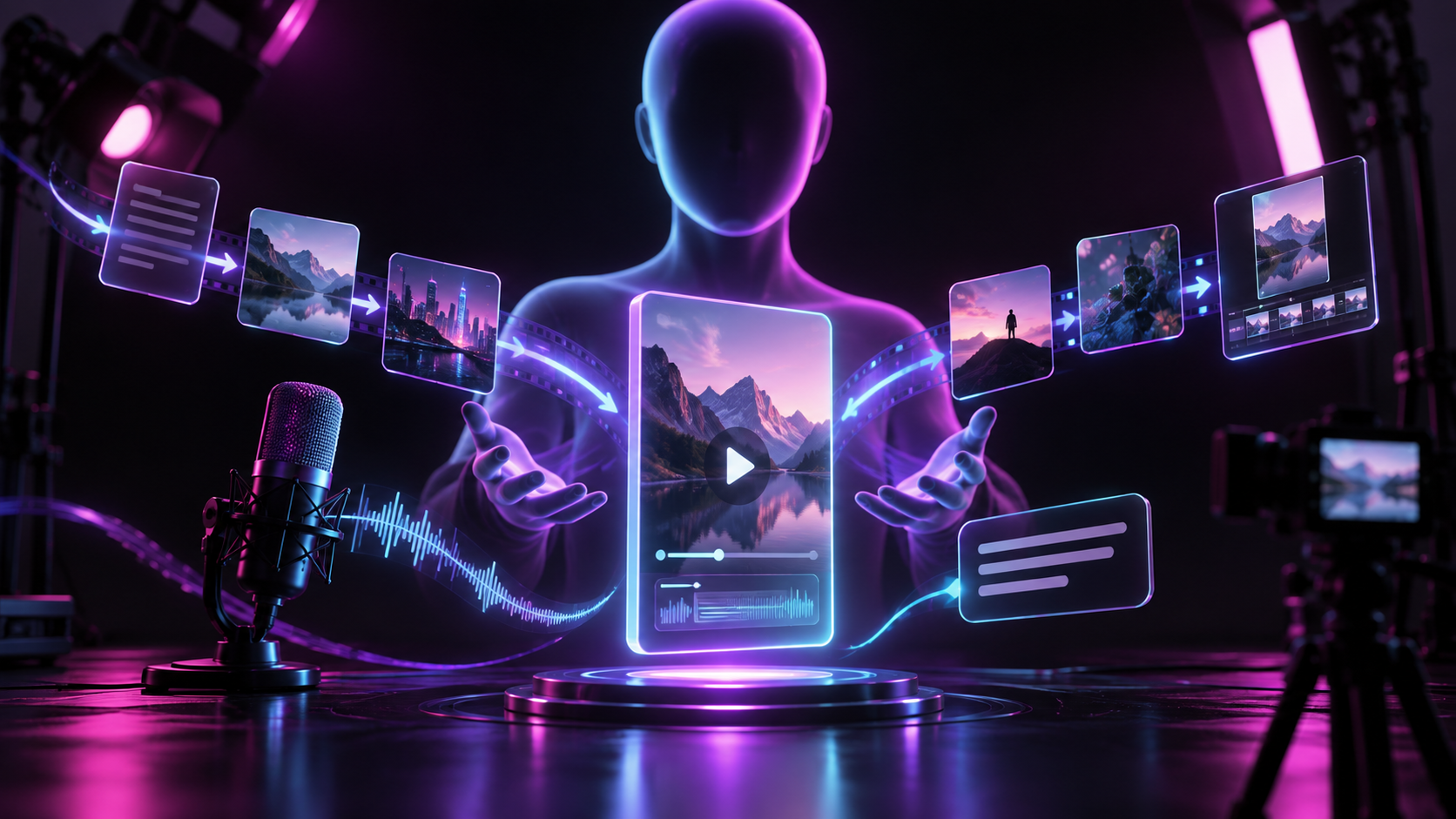
To start a faceless YouTube channel with AI in 2026: pick a profitable niche, write a short script, turn it into an AI voiceover, generate the visuals with an AI video tool, assemble the clip with captions and music, then publish and repeat on a schedule.
You never film or show your face.
The whole loop can run in under an hour per video once your niche and template are set.
| Step | What you do | AI does |
|---|---|---|
| 1 Niche | Pick a profitable, sustainable topic | Suggests angles and titles |
| 2 Script | Outline the hook and beats | Writes and tightens the script |
| 3 Voice | Choose a voice and tone | Generates the voiceover |
| 4 Visuals | Describe each scene | Generates video or images |
| 5 Assemble | Set pacing and captions | Adds captions, music, transitions |
| 6 Publish | Title, thumbnail, schedule | Suggests titles and tags |
Step 1: pick a profitable faceless niche
The niche decides your ceiling. Faceless works best where the value is in information, story or visuals rather than a personality: finance, history, psychology, tech, motivation, true-crime, relaxation and listicles.
Choose a niche you can make 100+ videos in, that has advertiser demand (higher RPM), and that suits short-form, long-form or both. See the full breakdown of profitable faceless niches and their RPMs before you commit.
Step 2: write a script built for retention
Every faceless video lives or dies on the first three seconds. Open with a concrete hook, deliver one clear idea per video, and keep sentences short for the voiceover.
Let AI draft the script from your outline, then edit for a natural spoken rhythm. Do not publish a raw AI script unchanged, add a real fact, number or opinion so the video is worth watching and citing.
Step 3: turn the script into an AI voiceover
The voice is your channel's identity. Pick one voice and keep it consistent across videos so viewers recognise you. Match the tone to the niche: calm for relaxation, energetic for listicles, measured for history. Generate the voiceover from your final script, then check pacing and pronunciation before moving on.
Step 4: generate the visuals (no camera, no stock salad)
This is where 2026 tools pull ahead. Instead of stitching random stock clips, describe each scene and let an AI video model generate cohesive, on-topic visuals, or use AI images with motion for a cleaner look.
Keep a consistent visual style across the video so it feels like one piece, not a clip salad. This is the single biggest quality difference between a channel that grows and one that looks auto-generated.
Step 5: assemble, caption and publish
Bring the voiceover and visuals together, add animated captions (most faceless views are muted at first), a light music bed and clean transitions. Write a specific title, make a readable thumbnail, and publish on a consistent schedule. Consistency beats perfection: a steady weekly cadence trains both the algorithm and your workflow.
What does it cost and how long until it pays?
Starting is cheap: an AI video and voice tool subscription replaces a creator, editor and stock library, and there is no camera or studio to buy. The real cost is consistency over months.
Monetisation is not instant, most faceless channels reach the YouTube Partner Program threshold over several months of steady publishing, and RPM depends heavily on niche and audience country. See the realistic income and timeline breakdown for concrete numbers before you set expectations.
Create Videos With AI
From inspiration to your own creation
Put your next idea into action.
Videos, images and ads. One creative studio. Pick what you want to make—or try the walkthrough before you sign up.
Your ideas. Your videos. No camera required.
Turn your next story into a faceless video. Explore the workflow, then create your own in FluxNote.
- 01 Choose a style
- 02 Add your idea
- 03 Make it your own
Start with an account. Create at your own pace.
Loading walkthrough… Full-screen link below if needed.
Tool access and generation allowances depend on your plan.
Frequently Asked Questions
Related Resources
- GuideHow to Start a Faceless True Crime YouTube Channel (2026)
- GuideMake Faceless Fitness Reels: A 5-Step Guide for 2026
- GuideBest Faceless TikTok Niches 2026: Finance Pays $15-20
- GuideBest AI Tools for Faceless YouTube Channels 2026
- GuideHow Much Do Faceless YouTube Channels Make? Costs & RPM
- GuideFaceless YouTube Automation Tools: 5 Picks for 2026
- GuideHow to Start a Faceless YouTube Channel with AI (2026)